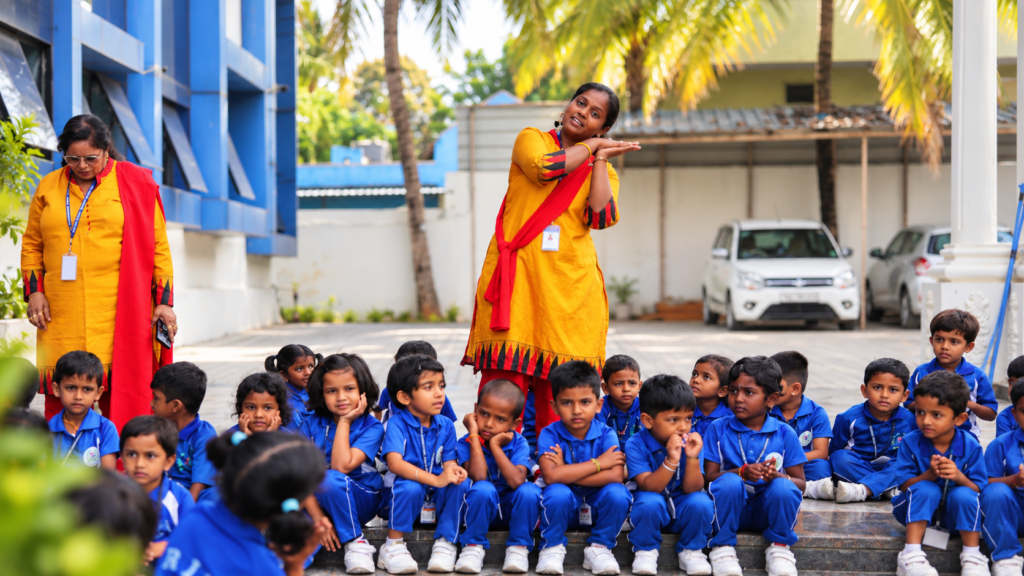
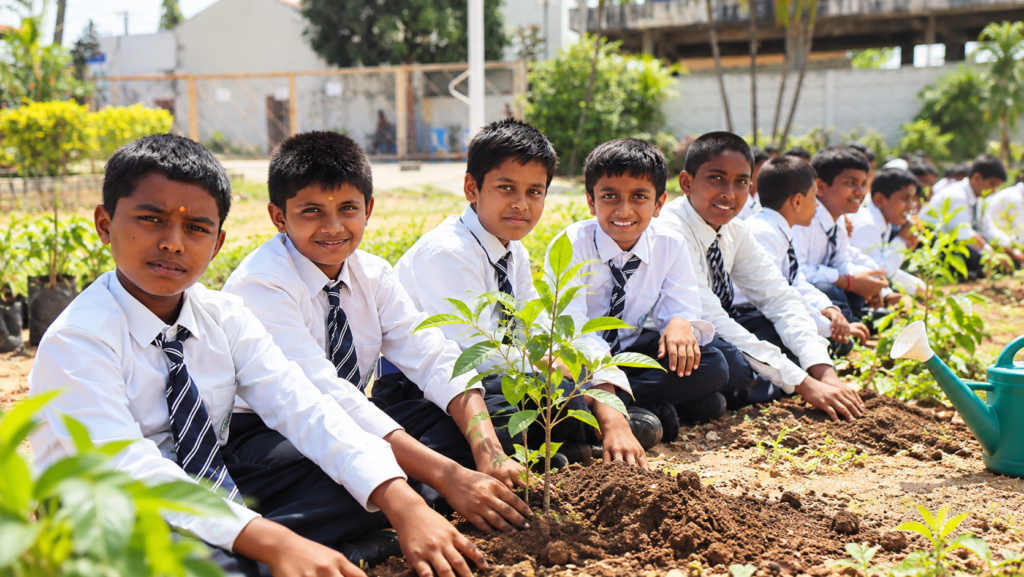
A thoughtful beginning to a child’s learning journey. At GRIPS, our Waldorf approach in the Pre-Primary years gives young children space to learn through play, imagination, movement, creativity, relationships and meaningful experiences.
GRIPS follows a Waldorf approach in the Pre-Primary years. From Standard 1 onwards, students follow the CBSE curriculum. The approach gives young children a meaningful beginning to their educational journey while providing a clear pathway into structured academic learning.
What Is Waldorf Education?
Learning the Whole Child
Waldorf education takes a broad view of the child not only what they know, but how they experience, create, communicate, relate and grow.
PLAY
Experience ideas through meaningful play.
IMAGINATION
Stories, creativity and imaginative experiences support learning.
MOVEMENT
Physical activity and movement are part of development.
CREATE
Artistic and creative experiences help children express themselves.
EXPERIENCE
Learn through real activities and everyday experiences.
CONNECT
Build relationships with teachers, peers and the environment.
CHILD DEVELOPMENT
Children Learn Differently as They Grow
Young children are not simply smaller versions of older students. Their ways of understanding, communicating, playing and learning change as they grow.
At GRIPS, we support each stage with age-appropriate experiences and learning opportunities.
EARLY YEARS
( Pre-Primary )
Play • Imagination • Experience
PRIMARY
( Standards 1–5 )
Understand • Practise • Connect
MIDDLE
( Standards 6–8 )
Question • Analyse • Apply
SECONDARY
( Standards 9–10 )
Think • Evaluate • Prepare
How Children Learn at GRIPS
Learning Begins With Experience
We use a structured, child-centred approach where children can move from hands-on experience to deeper understanding and real-world application.
EXPERIENCE
They encounter something new.
EXPLORE
They investigate through play, activity or observation.
OBSERVE
Teachers notice what children are showing, asking and discovering.
UNDERSTAND
They make connections and develop meaning.
CREATE
They express what they have discovered.
APPLY
Learning becomes part of everyday life.
THE ROLE OF THE TEACHER
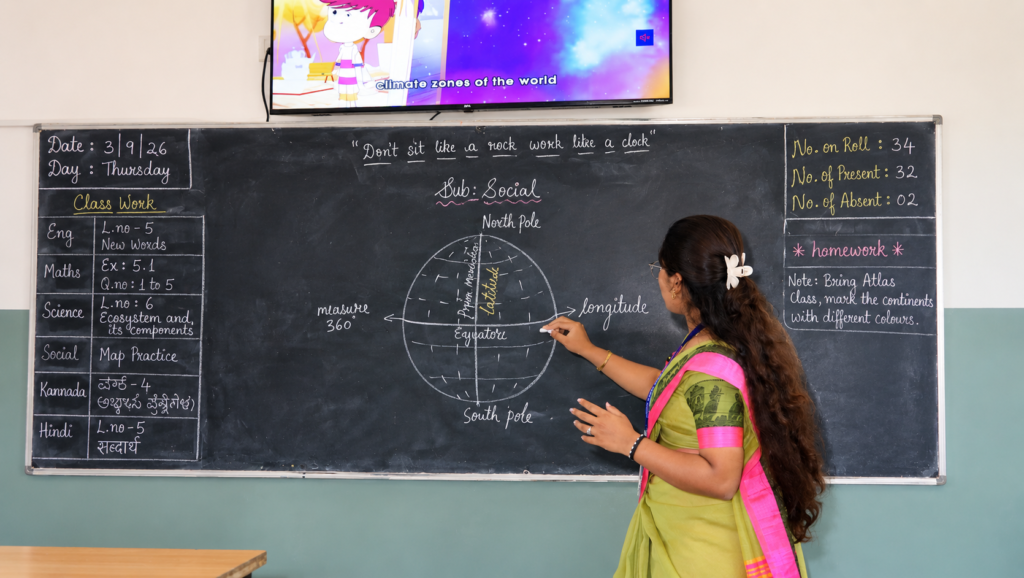
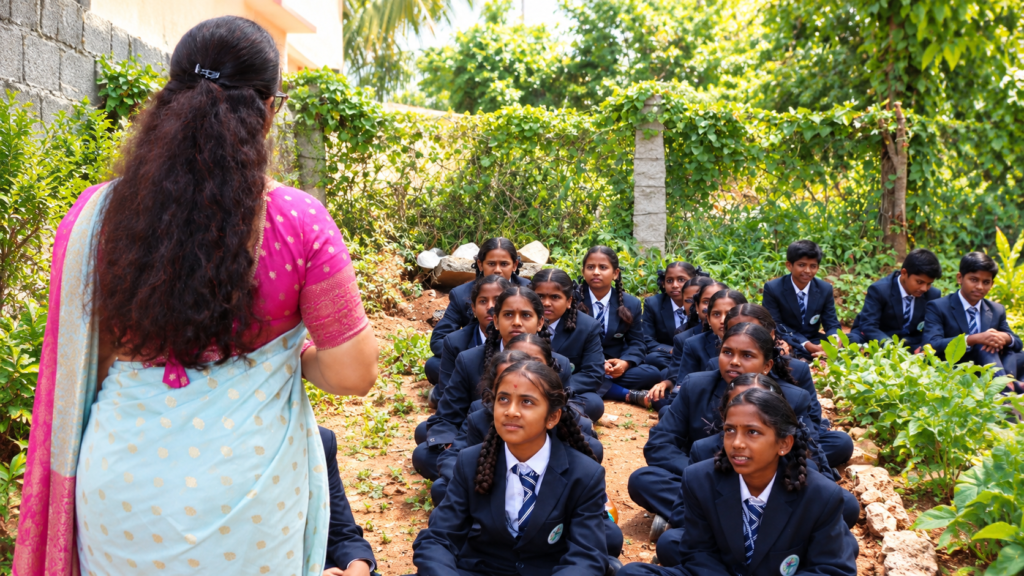
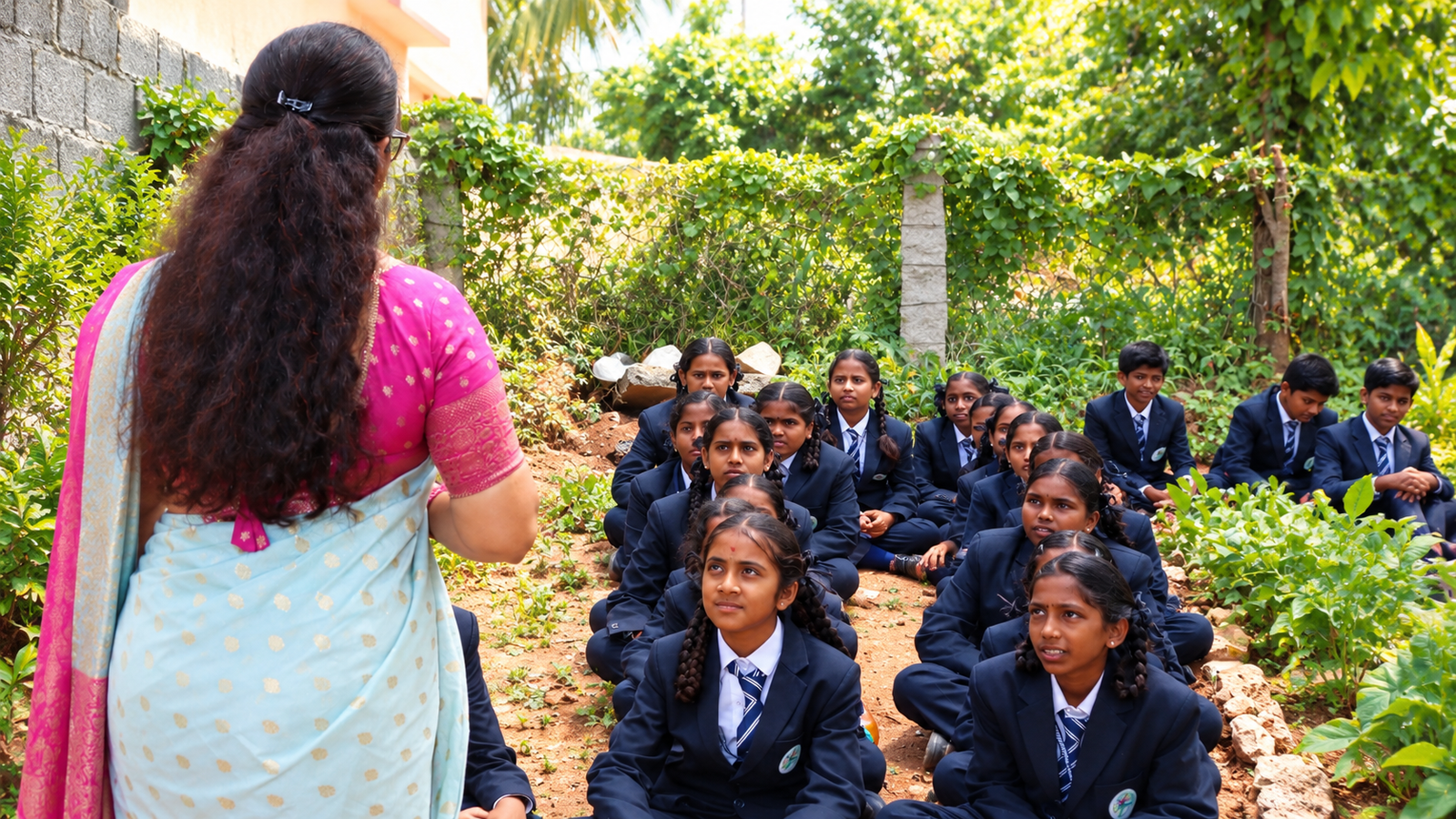
Our teachers are more than educators they guide, observe and notice each child’s developing interests and needs.
OBSERVE:
Notice each child's interests and development.
GUIDE:
Create experiences that invite exploration.
SUPPORT:
Provide structure while allowing space for discovery.
BUILD RELATIONSHIPS:
Grow trust and connection through everyday interactions.
A DIFFERENT BEGINNING.A STRONG FOUNDATION.
A Waldorf approach does not mean less learning. It means approaching learning in ways that are appropriate to young children’s development.
Children are given opportunities to experience, explore, communicate, create and develop the foundations they need for the next stage of their education.
It means that Early Years learning gives importance to play, imagination, movement, creativity, relationships and meaningful experiences as children build foundations for their next stage of learning.
The approach places strong emphasis on experiences, play, imagination, movement, creativity and relationships rather than treating early learning only as preparation for formal academic work.
The Early Years build foundations through meaningful experiences, communication, participation, exploration and development. From Standard 1, students continue into the CBSE curriculum.